
Others disagree with this explanation. The EpiPen has increased in price more than almost any other drug over the past few years. Today, a 2-pack of EpiPens costs around $415 after insurance, or %608 without insurance. This can cause people and families to make dangerous decisions regarding their and their children's health.
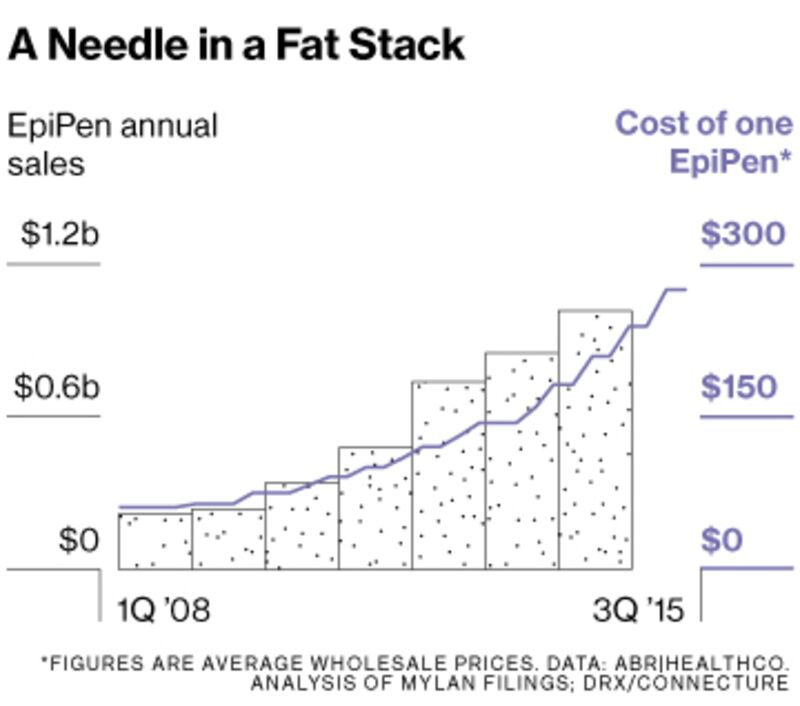
One issue is that Mylan has a virtual monopoly on EpiPens. Because EpiPen is both an injector and a drug, there are many expensive tests that must be performed before the drug can be sold. The only real competitor to EpiPen, Sanofi's Auvi-Q, was voluntarily recalled because of possible mis-calibrations of dosages.
Another possible explanation is that EpiPen became available to students in schools even if they were not specifically prescribed to students through the School Access to Emergency Epinephrine Act of 2013 - which became colloquially called the EpiPen Act. This act was not created to specifically benefit EpiPen or Mylan, but because EpiPen has no direct competitors it most certainly did.
EpiPens are significantly more expensive today than they were less than 10 years ago. It is a lifesaving drug and Mylan has decided to raise its price by over 400%. Until a competitor enters the epinephrine auto-injector market, prices will likely stay high.

No comments:
Post a Comment